
This post contains affiliat links. If you make a purchase, I may earn a commission at no extra cost to you.
A cozy reading corner needs a comfortable seat, focused light, books within reach, and a calm mix of neutral tones and natural textures. Organic Modern design brings those pieces together with clean lines and natural finishes. Whether you have an unused bedroom corner or a small spot in your living room, a few thoughtful choices can make it a welcoming place to read. The ideas here offer cozy reading nook inspiration for different rooms and homes, with shopping guidance based on the photo’s palette and layout. Start with what you need most, then build around it at a pace that suits your space. Treat the photo as a palette and layout guide, then adapt the pieces to the space you have.
Key Takeaways
- Choose a seat that supports the way you like to read.
- Use warm neutrals, earthy green, and natural materials.
- Keep books, a side table, and focused light within reach.
- Use shelves and art to give the corner a finished look.
- Measure your space before ordering furniture or window treatments.
- Start with the pieces your home and reading habits need most.
Layer Beige and Earthy Green Textiles
A beige seat becomes more inviting when one earthy-green accent and a second soft texture give it depth. This simple formula keeps your reading nook cozy without adding visual clutter. Start with neutral upholstery, then shop for one green pillow or throw and a contrasting tactile layer.
Use one neutral base, one green accent, and two tactile layers. A knitted blanket and a textured pillow add softness, while a plain beige seat gives the colors room to breathe. Pick pieces that feel comfortable against your skin and suit the way you settle in to read.
- A neutral base, such as beige or warm ivory upholstery.
- A green pillow or throw in an earthy, muted shade.
- One additional tactile layer, such as a knitted blanket.
Keep the strongest pattern to one textile so the layers feel collected rather than crowded.
When you shop, compare the green accent with your upholstery in natural light. A muted botanical print or subtle stripe can add interest without taking over the corner. Keep other pillows and blankets mostly solid, and let their different textures do the work. That gives you a soft, inviting reading spot without making the room feel busy.
Bring Books and Plants onto Natural Wood Shelves
Shelving should make favorite books easy to reach while leaving enough open surface to keep the nook visually calm. Natural wood adds warmth to a reading nook, while plants bring a small touch of green to the wall. Choose floating shelves for a slim display or a freestanding bookcase for deeper storage.
Match shelf depth to what you plan to store. Shallow shelves suit a few books and small potted plants; deeper options can hold larger books. Check the listed size and weight rating before choosing wall-mounted storage.
Floating shelves for a slim display
Floating shelves keep the floor clear and give a small collection a light visual footprint. The Williston Forge Pingree shelf measures 36 inches long by 7.5 inches deep and has a 50-pound weight rating. The 17 Stories Calheme shelf is 10 inches deep, offering more room than the Pingree.
| Product | Dimensions | Practical shopping detail |
| Williston Forge Pingree | 36 inches long by 7.5 inches deep | Rated to hold 50 pounds |
| 17 Stories Calheme | 10 inches deep | Deeper than the Pingree shelf |
| ET Woodcrafts bookshelf | 59 inches high by 23 inches wide by 12 inches deep to 86 by 35 by 12 inches | Black, oak, brown, or walnut finishes |
Freestanding shelves for deeper storage
A freestanding bookshelf rests on the floor and can hold a deeper collection than floating display shelves. The ET Woodcrafts natural-wood bookshelf ranges from 59 inches high by 23 inches wide by 12 inches deep to 86 inches high by 35 inches wide by 12 inches deep. Its finishes include black, oak, brown, and walnut.
For either type, mix books with a few small objects and leave some visible shelf space. That breathing room helps natural wood and plants stand out without turning the wall into a crowded display. Check wall support and the weight of the items planned for any floating shelf before installation.
Frame a Botanical Gallery Above the Chair
Botanical prints add a quiet natural motif while keeping the wall above a reading seat visually light. Simple frames in natural wood or muted finishes fit an Organic Modern room without competing with its neutral colors. A three-piece botanical grouping gives the wall a defined arrangement.
Start with a 2-3 inch gap between frames as a practical spacing guide for a compact gallery. Adjust that distance to suit the artwork and wall; it is a starting point, not a strict rule. Align the group with the chair instead of stretching it across the whole room.
- Choose botanical subjects, such as leaves, stems, or flowers.
- Look for simple frames in natural wood or a muted finish.
- Pick artwork sized for the wall area above your chair.
When shopping, compare the art’s background color with your wall and upholstery. Soft green, warm white, and earthy brown can tie the design together without adding a strong accent color. A small grouping can feel finished even on a narrow wall, especially when the frame sizes relate to one another.
Lay out the frames on the floor first to settle their spacing and overall shape.
Filter Window Light with a Woven Bamboo Shade
A woven shade softens the window visually while keeping the palette grounded in natural texture. A woven bamboo shade adds warmth without bringing in a strong color, so it suits a calm Organic Modern room. Its filtered daylight can make a reading space feel softer during the day.
A two-layer window treatment can pair a woven shade with curtains. The shade brings texture, while curtains can add a softer finish around the frame. For an outside mount, extending the treatment about 2-3 inches beyond each side is a common starting point when wall space allows.
Check the window frame and the surrounding wall before shopping. An inside mount keeps the treatment within the frame; an outside mount covers more of the wall around it. The available space can affect which style works and how wide the shade should be.
Consider how the shade’s weave looks with wood shelves and other natural finishes nearby. A subtle variation in the bamboo gives the window interest without creating a new focal color. Measure the window and available wall space before choosing an inside- or outside-mounted treatment.
Place a Warm Reading Lamp Beside the Chair
Place the light source beside the reader and slightly behind the shoulder to illuminate the page. This reading position helps direct light where you need it, rather than relying on a decorative glow. A floor lamp, wall light, or portable option can suit different layouts.
A lamp placed behind your head can leave the page in your shadow. Check how its arm or head reaches from your usual seated position. A warm setting can make evening reading comfortable without changing the room’s quiet palette.
Floor and swing-arm lights
A floor lamp can sit beside the chair when you have room for its base. The Brightech Leaf LED floor lamp is 19 inches wide with its arm extended, and its lamp head can swing beside a seated reader. A swing-arm sconce can reach from the wall instead.
| Light | Placement or reach | Specific feature |
| Brightech Leaf LED floor lamp | 19 inches wide with arm extended | Lamp head swings beside a seated reader |
| Joss & Main Kevyn swing-arm sconce | Extends 24.25 inches from the wall | Plugs in; cord included |
| Glocusent LED neck reading light | Portable, worn around the neck | Warm 3,000K setting |
Wall and portable reading lights
A wall sconce saves floor space, and the Joss & Main Kevyn extends 24.25 inches from the wall. It plugs in, with the cord included. A portable Glocusent LED neck light can travel with you between seats or rooms when a fixed lamp is impractical.
The Glocusent has a warm 3,000K setting and can run for up to 80 hours on a charge with one head on low. Use it to direct light toward your book, not just to add a glow around the chair. Check the lamp’s reach from the actual seated position before settling on its location.
Keep a Small Side Table Within Reach
A small side table makes a reading seat more useful when its surface is easy to reach from the chair. A compact shape can fit beside the arm without taking over a tight corner. A rounded top is one option when you want to soften the furniture’s edges.
A 16-20 inch tabletop is a practical starting point for a cup, book, and small plant. A side table typically sits level with or slightly below the chair arm. Check its height from the seated position, since a table that looks right while standing may feel awkward when you reach for it.
- A cup for tea, coffee, or water.
- The book you are reading now.
- A small plant in a simple pot.
When shopping, compare a round table with a narrow design that tucks close to the chair. Consider the space needed for your feet and the chair’s movement, too. A useful surface should feel reachable without making it harder to settle into your seat.
Leave enough clear tabletop for the drink or book you reach for most often.
Anchor the Seat with a Right-Sized Rug
A 4×6-foot rug can anchor one reading chair and a small side table when the chair’s front legs rest on it. Its 24-square-foot footprint gives a single seat a defined place within the room. Measure the furniture group before ordering so the rug fits the actual layout.
A 4×6-foot rug is for one chair, not a full seating group. A larger arrangement with two chairs needs closer to 6×9 or 8×10 feet. In a tight reading nook, choose a pile under 0.5 inches to help chair bases and ottomans move freely.
| Rug size | Layout | Fit |
| 4×6 feet | One chair and a small side table | Chair’s front legs rest on rug |
| 6×9 feet | Larger seating group | Room for two chairs |
| 8×10 feet | Full seating arrangement | More area for a complete group |
A rocking or swiveling chair can slip on a smooth floor, so a rug pad can help keep it steady. Size the pad to the rug’s 24-square-foot footprint. Include the side table, lamp, and cord when mapping the area, since those pieces can make a rug feel tight.
Trace the planned furniture footprint, including the lamp cord, before ordering the rug.
Cozy Reading Corner Ideas for Small Spaces
An underused corner in a bedroom or living room can become a reading nook without needing a separate room. A compact arrangement can start with a chair, a lamp, and a small surface for your book or drink. Keep the colors and finishes consistent with the rest of the room.
Leave 30 inches of clear floor on each side of a chair that people walk past. A side of the chair against a wall does not need that clearance. This distinction helps you place the seat without blocking the path through a shared space.
A hallway can be a tempting place for a chair, but residential hallways should be at least 36 inches wide. A chair reduces the available passage width, so keep it out of a route people need to use.
In a bedroom, a corner beside a dresser or window may have a natural boundary. In a living room, place the chair where it feels connected to the space but does not interrupt daily movement. Keep the route through the room clear before placing the chair in a pass-through area.
Turn a Window Seat into a Reading Perch
A window seat can turn natural light and an underused ledge into a comfortable place to read. Cushions and pillows make a built-in or freestanding seat feel softer and more inviting. Choose a neutral seat pad that suits the room and leaves space for a few cushions.
An adult reading window seat can be 20-24 inches deep and 16-20 inches high from the floor. For a child, a depth of 16-18 inches suits reading better than a deeper adult seat. These ranges offer a planning start for a comfortable perch.

Before buying cushions, measure the available depth and height of the seat. A pad that is too deep can take away usable sitting space, while an overly thick cushion changes the seat height. Check how the finished seat will feel for its intended reader.
Add pillows in a muted green or warm neutral to connect the perch with the rest of the room. A small throw can add softness on cooler days without crowding the seat. Match cushion depth to the intended reader before ordering a seat pad.
Choose Linen Curtains for a Soft Neutral Glow
Light-filtering linen and linen-blend curtains can soften daylight while keeping a neutral reading corner airy. Panel construction affects how curtains hang and how much light reaches the room. Compare fabric content, length, and heading style before choosing a pair.
Unlined panels filter light rather than blocking it completely. Linen blends can offer a relaxed texture, while pure linen gives the window a more natural, lightly uneven finish. Neutral tones keep the treatment from competing with your reading nook’s other materials.
Linen blends for filtered daylight
The NICETOWN linen light-filtering curtain package contains two panels, each 55 inches wide by 96 inches long. Each panel contains 30% natural linen and is unlined, so it filters light while retaining a soft, airy look. The fabric blend offers a linen-like texture in a ready-made curtain.
NICETOWN panels have rod pockets and back tabs, giving you two ways to hang them. They fit rods up to 3.7 inches in diameter. Check the rod size and the panel length against your window before ordering, especially if the curtains will hang close to the floor.
Pure linen for a textured neutral finish
Magic Linen’s Tab Top Linen Curtain Panel is made from 100% European flax and is OEKO-TEX certified. The reviewed striped-natural version filters light, so it brings texture and a quiet pattern without fully darkening the room. Its tab-top heading gives the curtain a relaxed appearance.
Quince’s European Linen Curtain panel is described as midweight and light-filtering. In 2026, its listed price was $82. Magic Linen curtains were listed at $93 in 2026. These listed amounts give you clear price points to compare across the two linen options.
| Curtain option | Fabric or light-filtering detail | Listed price |
| Magic Linen | 100% European flax; striped-natural version filters light | $93 in 2026 |
| Quince | European linen; midweight and light-filtering | $82 in 2026 |
| Piglet in Bed | 55% European linen, 45% long-staple cotton | $299 per pair in 2026 |
Gingham voile and custom linen options
Piglet in Bed’s short Mushroom Gingham voile curtains use 55% European linen and 45% long-staple cotton. In 2026, the curtains were listed at $299 per pair. Their muted gingham pattern offers a gentle alternative to a plain neutral panel.
Custom linen curtains from Etsy shop LinenbyMN were listed at $60 and up in 2026. Custom sizing can suit a window that does not match standard panel lengths. Compare the panel length, heading style, and the amount of light you want before choosing a curtain.
Use Vertical Shelving for Book Storage
Vertical book storage can keep a reading collection close at hand while leaving more floor area around the chair. A three-part arrangement can give each shelf area a clear role without filling every inch. Put frequently used books where you can reach them from your seat.
Keep current reads within seated reach and leave some shelf space open. That balance makes storage useful while helping the nook feel intentional. Use wall height for the collection instead of spreading books across the floor or every nearby surface.
- Current reads, including the book you are reading now.
- Favorite books you want to keep nearby.
- A small set of decorative objects, such as a plant or ceramic piece.
Group books by how often you reach for them, not only by size or color. The arrangement can stay flexible as your reading changes. Keep heavier books on shelves that suit their weight, and leave a little open space between the groupings.
Put the book you are reading now where you can reach it without standing up.
Find a Chair That Fits Your Reading Posture
A reading chair should support your back without making you slide forward or pressing the seat against the backs of your knees. A shallow or mid-depth seat is a useful starting point for reading because it keeps the backrest within easy reach. Choose a chair that suits how you like to sit.
For everyday lounge-chair use, start with a seat depth of 21-24 inches. A seat about 20 inches deep or less favors upright support and easier entry and exit. A depth of 24-28 inches favors relaxed lounging.

Choose a seat depth for your posture
Seat depth is the distance from the front of the seat to the back, not the chair’s overall depth. For reading, the backrest should remain within easy reach, so you can sit back without sliding forward. A deep seat may suit lounging, but it can make upright reading less comfortable.
Your seat should leave a small gap behind your knees. Compare the seat depth with your seated body length from your buttocks to the backs of your knees. This fit helps you keep your feet supported while your back rests against the chair.
Compare supportive chairs by form and upholstery
The Gracie Oaks Arshveer wingback chair measures 27.75 inches wide and 33 inches deep overall. Those are the chair’s outside dimensions, not its seat depth, so check the seat measurements separately when comparing fit. Its wingback shape offers a more defined profile.
The Serena & Lily Miramar Chair uses Perennials performance fabric made from solution-dyed acrylic. The fabric resists mold, mildew, staining, and UV damage. The Knoll Womb Chair has an angled back, built-in upholstered armrests, and a separate seat cushion; its design dates to the late 1940s.
Compare both the chair’s form and its upholstery with your everyday routine. A supportive back and a comfortable knee gap matter more during a long reading session than a silhouette alone. If possible, sit in the chair and check that your feet and back feel supported before choosing it.
Build the Organic Modern Look with Natural Materials
Organic Modern design pairs clean-lined shapes with natural materials and an understated, earthy palette. Material contrast gives a reading nook warmth without requiring a lot of decoration. Combine wood grain, woven fibers, linen-like upholstery, stone, plants, and matte ceramics.
Repeat a few natural finishes instead of introducing a different material in every piece. Wood can connect shelves to a side table, while woven fibers and linen-like upholstery soften the room. A plant or matte ceramic object adds texture without pulling the colors away from warm neutrals and earthy greens.
The Organic Design in Home Furnishings competition took place in 1940 and 1941, and the Museum of Modern Art’s 1941 exhibition helped introduce the approach to a broad audience. Today, the mix of simple forms and natural finishes works well in a calm reading space.
Keep the palette grounded with warm beige, soft white, natural wood, and restrained green. Matte ceramics and stone can add a quiet change in texture without adding shine or strong color. Repeat a few natural finishes across the nook so the materials feel connected.
Choose a Foldout Seat for Flexible Reading Space
A foldout reading chair can make one corner serve both quiet reading time and occasional overnight use. A flexible seat can suit a guest room, studio, or shared living space where furniture needs more than one purpose. Consider how the room works on an ordinary day before choosing it.
The Sabai Eclipse Chair’s cushions fold out to make a twin-size bed. The company offers replacement parts, including cushions, legs, and slipcovers. That gives you a named option to consider when you want a reading seat that can serve as a guest bed.
Think about the floor area the chair needs when open, along with the room’s usual furniture arrangement. A foldout piece may work well in a studio or guest room, but it should not block a door or make everyday use awkward. Picture the seat fully opened in the room before committing to a flexible furniture piece.
Shop the Photo’s Neutral, Earthy Palette
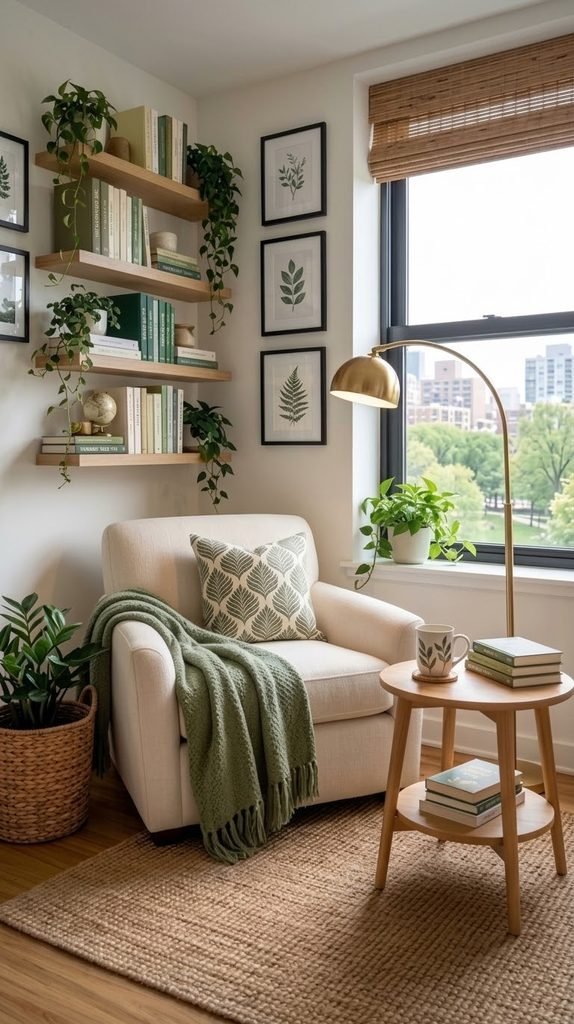
The photo’s look comes from a few calm colors, natural finishes, and useful pieces gathered around one comfortable chair. This palette-led approach makes cozy reading corner ideas easier to shop for without requiring a matching set. Choose only what your room and reading habits need.
Keep the soft neutrals and earthy greens consistent across the pieces you choose. You can start with the chair and add supporting items over time. A natural finish or muted green can help a new purchase sit comfortably with things you already own.

- A beige armchair as the main seat.
- A green pillow and knitted throw for soft layers.
- Light-wood shelves with green books and potted plants.
- Botanical framed art for a quiet wall arrangement.
- A woven bamboo blind for the window.
- A gold arched lamp with a round wooden side table.
Start with the chair and one or two supporting pieces, then add the remaining decor only where the corner needs it.
Use the list as a set of options, not a requirement to buy every item. If your space needs light most, start there; if it needs storage, choose shelves first. A plant or book stack can make the arrangement feel personal without changing its calm color direction.
Conclusion
A reading corner feels personal when comfort leads and every added piece has a clear purpose. In an Organic Modern home, a comfortable seat and a few natural textures can make an existing corner feel like a place you want to return to. You do not need to fill the room to make it feel complete.
Let your daily routine guide the first choice. You might need a better seat, a focused light, or a small surface for your current book. Choose the chair or seat you most want to read in, then build the corner around it.
FAQ
How do I make a bedroom corner feel like a separate reading spot?
Use a small rug to define the chair area, then add one dedicated light source and a reachable surface. Those pieces give the corner a clear purpose without taking over the bedroom. Keep the rug and furniture compact enough for the room’s usual movement, and choose colors that relate to nearby bedding or furniture.
How many books should I keep in a small reading nook?
Keep a manageable selection within reach, starting with current reads and a few favorites, then size storage to the collection. You do not need to keep every book beside the chair. A small shelf with room to grow can hold the ones you return to most and leave the rest elsewhere in your home.
What colors go with a beige reading chair?
Pair beige with earthy greens, natural wood, and one restrained pattern for a calm palette. Muted green works well as a pillow or throw, while wood adds warmth without introducing a bright color. Keep the other textiles mostly solid so the pattern adds interest without dominating the chair.
How can I make a neutral reading nook feel less plain?
Combine contrasting textures, such as woven fibers, a knitted layer, wood grain, and matte ceramics. These materials add depth while keeping the colors quiet. You can also vary the shapes of a few objects, such as pairing a rounded side table with a clean-lined shelf, without crowding the corner.
Can I make a reading nook in a shared living room?
Yes, a compact chair arrangement can fit in a shared living room if the main route stays usable. A small rug can mark the reading area as a separate spot without a screen or divider. Keep the chair and table close together, and avoid placing them where people pass through the room.
How can I reduce harsh daylight on books near a window?
Use a woven shade or light-filtering curtain to soften incoming daylight, then position the reading seat to suit the remaining natural light. A shade can reduce glare while retaining a natural texture, and curtains offer another soft layer. Check how daylight reaches the page at the time you usually read.