
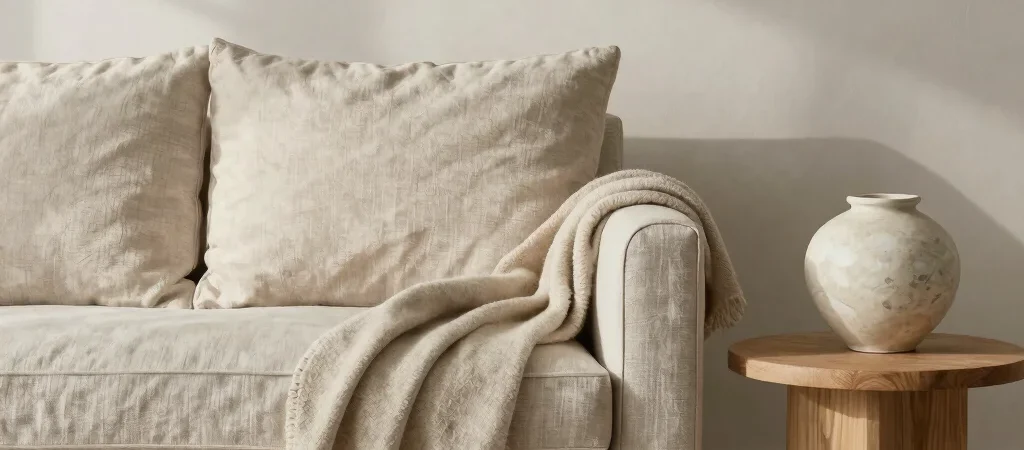
A beige wall, a beige sofa, and a beige rug don’t automatically make a room feel calm. If every surface is equally smooth and similar in tone, the space can lose its depth. I look for contrast in the materials before adding another color.
Let Texture Do the Work
Pair a nubby wool throw with a smooth wooden table, or place a matte ceramic vessel against a linen curtain. These small shifts give the eye somewhere to rest without introducing a busy pattern. Natural materials also change subtly with use, which helps a neutral room feel lived in rather than newly assembled.
It helps to think about touch as well as appearance. A wool rug underfoot, a linen cushion that softens over time, and a wood surface with visible grain each bring a different kind of warmth. You don’t need all of them in every room; one or two clear contrasts may be enough.
Pay Attention to Undertones
Neutral tones can lean warm, cool, pink, or green, and those differences become noticeable when materials sit side by side. Before committing to a large paint color or rug, look at samples near the window and again in the evening. A warm limestone shade may feel soft in daylight but more yellow under a cool bulb.
Make Room for Shadow
Soft daylight is part of what gives Organic Modern rooms their quiet depth. Sheer curtains can filter strong sun, while a low lamp creates a more intimate pool of light after dusk. Rather than lighting every corner evenly, let a few gentle shadows show the texture of plaster, fabric, and wood.
If a neutral room feels unfinished, pause before buying a new accent color. Add one material with a different texture, or move a lamp so the light grazes a wall instead of shining straight at it. Often, the room needs variation in surface and light—not more things.