
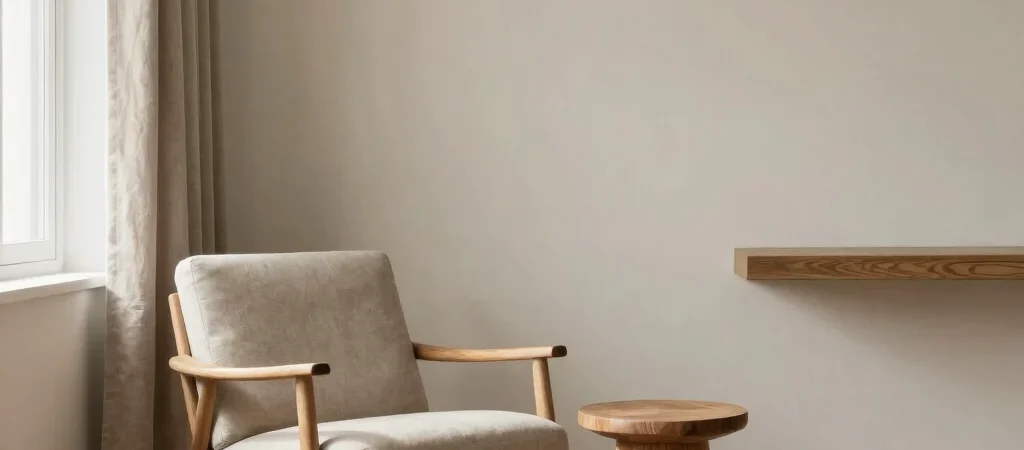
Sometimes a room is tidy and still doesn’t feel settled. The chair blocks the path to the window, the lamp is too far from where you sit, or every surface asks for attention at once. Before changing the decor, I like to notice how the room is being used.
Follow the Everyday Path
Walk through the room as you normally would, carrying whatever you usually bring—a book, a mug, or a folded blanket. If you have to weave around a table or move a chair to reach the window, try shifting the layout first. Even a small adjustment can make the space feel easier without changing its style.
Give frequently used pieces a natural place to land. A slim side table near a reading chair can be more useful than a larger coffee table across the room, and a basket beside the sofa can keep a throw close without leaving it draped over every surface. Practical placement is part of a calm interior.
Use Light to Create Ease
Notice which corners feel inviting in the morning and which go dim by late afternoon. A lamp placed near a reading chair can make that spot usable after sunset, while a curtain that filters bright light may soften the room during the day. Keep the light sources at different heights so the room feels layered rather than uniformly bright.
Edit One Surface at a Time
A crowded console or coffee table can make the whole room feel busier than it is. Remove everything from one surface, then return only what you use or genuinely enjoy seeing: perhaps a shallow bowl, a book, and a small ceramic piece. Leaving open space around those objects lets their shape and material register.
Make one change and live with it for a few evenings before making another. If the path through the room feels clearer and your reading chair gets used more often, the space is moving in the right direction. Settled doesn’t mean finished; it means the room is beginning to support the way you live in it.